Saturday, 4 June 2022

Get Rid of Kidney Stones By Making Yourself Pee More With These Foods (Flomax Alternatives?)


(Photo Credit: Maja Cvetojevic @majacvetojevic)


Urinate More Often

One of the most commonly prescribed medicine for those who have kidney stones is Flomax. It makes you pee or urinate more. Some people are not very comfortable with its effect since it works by making the prostate muscles relax. Fortunately, there are foods that can also help you achieve the same effect.

If you are new to this, you might ask, “Why do I have to urinate more?”. Well, the only way for you to pass those stones is through urination. Since you'll be peeing more, you will need to drink more water.

Even though I'll be presenting natural diuretic foods that make you pee more, their effectiveness may depend on certain factors which may or may not include your health and the size of your kidney stones. It's always best to consult for doctor before committing yourself to any kind of treatment or diet.

Caffeine and Soda

While they are also known for their diuretic effect, they can harm you because of their effect on the acidity of the urine so you should go easy on them. Don't depend on them for curing your kidney stones. Your doctor might even recommend that you stay away from them.

Fruits

Fruits generally help you with urination. However, you can have better effect with lemon, watermelon, grapes and pears. Fruits that have diuretic effects tend to be watery. My personal favorite is lemon because it's the easier for me to store. I usually squeeze the lemon juice out and dilute it in water and the store it in the fridge. You can also take it directly without the water. Coincidentally, lemon is popular among people who have experience with kidney stones.

Don't Hate The Veggies

Vegetables are included in this list. The veggies that make you pee or urinate more often include garlic, onion, cucumber, asparagus, etc. I eat raw garlic from time to time, and I'd say it has a strong diuretic effect. However, the taste might turn you off. For those I don't want to deal with the unpleasant vegetable taste, cucumber might be the best choice since they can be prepared together with your favorite salad dressing and ingredients.

Say Hello to Your Favorite Herbs

If herbs are your thing, then parsley and dandelion are probably included in your list. That's good since they can help increase urination. Hibiscus, which can be consumed in tea form, can also help you pee more. The good thing about these herbs is that you can include them in your favorite dish.

Sunday, 29 May 2022

How to Pass Kidney Stones by Jumping and Bumping


Can you pass kidney stones naturally by jumping and bumping?

In this post, let me introduce you to the jump and bump method. It's a common way to pass kidney stones without surgery. You would likely hear about it from people who have passed kidney stones before. While it has a decent level of effectiveness, there are things you have to keep in mind before trying it out. I'll later discuss how to do it.

Kidney Stone Size

It's not for everyone. It only works for kidney stones that are small enough to pass without surgery so you have to consult with your doctor and determine whether they can be passed naturally. If the stones are around 2-3 mm in size, then you'd be able to pass them naturally. If your stones are too big to pass without surgery, you might be tempted to try this out. However, doing so may cause pain and even infection so you might want to bring this up with your doctor before trying it.

Movement of the Stones

How do you pass those kidney stones? You can only do it by making them move. The jump and bump method which solely involves moving and causing vibration inside your body does that. Aside from the movement, you also need to increase your water intake. Kidney stones can only move with enough presence of liquid so don't neglect your water intake. A common practice is to drink 3-4 liters of water a day. You might have to increase or decrease the amount depending on your body size or the recommendation of your doctor.

Jumping

Start by standing firmly, with your feet apart from each other at shoulder width. Lightly jump and land on your feet with most of your weight landing on your heels. The impact on your heels will cause your body to vibrate which will promote the movement of your kidney stones. Alternatively, you can stand on your toes and then drop your weight to your heels with force. This may be the better option for those who don't feel comfortable with jumping. Be careful not to put too much force on your heels so you don't get injured. You only need enough force to cause vibration in your body.

Bumping

This works on the same principle except that you can do this on your chair. Instead of landing on your heels, you land on your butt. Gently hop and fall on your butt to cause vibration in your body. Make sure you do this on a sturdy chair. I'd personally recommend that you do this on a concrete platform since you can produce a stronger vibration when landing on concrete.

Expected Results and Warning

When can you expect those kidney stones to pass? It can be dictated by factors such as amount of water in the body, extent of movement, size of kidney stones, etc. Hence, you can't really tell when it's going to happen. For some, it only took less than five days.

If your kidney stones are already causing pain, then you might have to take it easy on this as it might make the pain worse. While keeping it up would pass the stones and possibly make the pain go away, there might be other health issues you have to address first.

Friday, 27 May 2022

Are your kidney stones making you pee more often?


Constant urination is one of the things a person with kidney stones may have to deal with.

Let me share a case that my research has led me to. The person has a small kidney stones with the size of 2 mm. Based on common knowledge, kidney stones that are around 2-3 mm can pass themselves. Doctors would usually advise their patients who have small kidney stones to just drink more water. Others have good results with lemon juice. If you want more info about it, check out this post.

Back to the case, the person experienced back and abdominal pain and even encountered blood in his urine. This might be too much for a small kidney stone but the test shows that his case is minor. Fortunately, the symptoms stopped after a few days. However, he has to deal with the constant urge to urinate.

Constant urination may not be bad

After finding out that you have kidney stones and that getting rid of them requires you to drink more water, you would likely start taking more liquid. This may cause you to pee more often, which is perfectly natural. Also, keep in mind that the only way for those stones to pass is through urination. Hence, peeing more often than you usually do may actually help you especially when you don't travel a lot and spend most of your time at home.

Obstruction of the Urine Flow

You might hear from people that it may be caused by obstruction of the urine flow. Based on informal discussions with some registered nurses, this can be the case if your urine goes out in a spraying manner. This is because the stone may be stuck in the urethra, which causes the urine to come out differently. It may come with some blood in the urine.

Irritation of the Bladder

I came across some literature from urologists that say that the frequent urination which have been shown to have nothing to do with the increase of water intake. I'm talking about having the constant urge to pee but when it's time for you to let it out, you're not letting out much of it.

It may be caused by ureteral stones. These are stones that are just outside the bladder. This causes UTI which then cause inflammation of the bladder. This makes the bladder sensitive, which is why a little stretch makes you want to pee right away.

If this is your case, then the best course of action is to have yourself checked. Since the urge to pee isn't caused by the physical need to pee, holding it for a bit probably wouldn't harm you especially when you're working or traveling.

Conclusion

Keep in mind that even though the common remedy on these possibilities is to increase in water intake, it is best to have some tests done to know where you're at and determine the best action to take.

Monday, 23 May 2022

How to Give Yourself an Intense Workout Even if You Have Kidney Stones


Exercising and keeping yourself in good shape is important. However, keeping it up might be a big challenge if you have kidney stones, since the movement of your body may cause pain on certain occasions. The best way to go around it is to engage yourself in low-intensity exercises.

While low intensity exercises are good for your health and should not be ignored, they have their limitations. They don't engage the fast twitch muscles and may not do much when it comes to improving and maintaining one's cardiovascular endurance. Also, intense training has immediate benefits when it comes to preventing diseases that are caused by infection. If you are an athletic person, going full time with low intensity workouts would make you lose your athletic capabilities. 


Is walking still the best exercise?

Walking is probably the most convenient option to those who are experiencing mild to severe cases of kidney stones. The good thing about walking is you can do it at any time of the day assuming that it's not raining. If your job requires you to travel by foot, then you won't have to think about exercising as far as general health is concerned. Now, if your goal is to lose weight and you're already walking regularly, then you only have to think about improving your diet.

Since walking is classified as a low-intensity exercise, it may not be ideal for those who want to develop and maintain strength and power in its basic state. Personally, I only see walking as a means to maintain health. It's important but not helpful in maintaining athletic capabilities.


Before Anything Else

Before trying any kind of exercise, it's always a good idea to tell your doctor about it. Keep in mind that the exercises presented here are suggestions. There might be better options out there.


Increasing the Intensity

Considering how kidney stones manifest, engaging yourself in traditional high intensity training may not be a good idea. It may cause pain, especially for those who are already set to undergo kidney stone surgery. You won't have to worry much about it if your kidney stones are small enough to pass, but they might cause pain occasionally and exercising with high intensity can make it worse. Hence, you have to increase the intensity of your workout in a different manner.


Intense Cardiovascular Stimulation By Walking

You don't have to run as fast as you can or jog for miles just to get your heart rate pumping at its peak. You can actually achieve it by walking. To make it work, you need to add a twist. You have to hold your breath for a few seconds after the exhalation. Do it repeatedly for 5-10 minutes. Feel free to take a break, so you don't put too much stress on your body.

The main objective is to produce a shortage of oxygen, which is normally done by increasing the intensity of your physical activity. You can achieve the same thing with a low intensity exercise by holding your breath after the exhalation.

You can start with a 3-5 second breath hold and even shorten it to 2 seconds depending on your fitness level . There may be times when you have to stop after holding your breath, so you can catch your breath. Feel free to take a 5-10 second break after holding your breath, but you can take your time. Don't strain yourself too much.

Since you are engaged in a low-intensity activity, the chance of experiencing pain from your kidney stones is lower compared to conventional training.


Isometrics

Isometric exercises or isometrics are exercises that involve applying muscular force or tensing your muscles without moving your body. The easiest example I can give is when you are pushing a wall. While the pushing force doesn't make the wall and your limbs move, your muscles are at a stimulated state.

With the lack of movement, you can make your muscles work without increasing the chances of making the pain caused by those kidney stones worse.


Overcoming Isometrics

These exercises involve applying force on immovable objects such as the wall or permanently mounted steel bars. This type of isometrics lets you apply maximum force without the risk of getting injured. Since you are applying maximum force, your fast twitch muscles are also stimulated.

This may not be ideal for those who want to build muscles, but it's good for building and maintaining power.

There are also other types of isometrics, which are yielding and static tension. In my opinion, Overcoming isometrics is ideal when it comes to achieving a high intensity training effect. I'll probably make another post about them in the future. Here are some overcoming isometrics to help you get started.


Wall Push

This may be the simplest form of isometrics, since all you need to do is push the wall as if you're trying to make it move. If it's your first time, put a little limit on the force you are putting, so your body can easily get accustomed to the exercise. To do a set, push, and then keep the force up for 6-12 seconds before releasing. You can shorten the time if it's too much for you. Take a 30 second to a one-minute rest before doing the next set. Doing three sets is a common practice, but you can do between one and two sets according to your fitness level.


Wall Push For The Legs

To do this, lean your back against the wall and then push your legs as if you are moving the wall. You might find it easier to just push with one leg on each set. To each his own.


Pulling a Pole

This is mainly for the biceps and other muscles associated with pulling movement. While there are other more efficient forms of isometrics for this, I'd recommend this for those who don't have any specialized equipment. To get started, stand on a pole or any immovable structure that you can pull. Hold on to it with one hand. Lean back and pull the pole. While you can do this with both hands on the pole, I think you can get a better muscular engagement with one hand.

Wednesday, 18 May 2022

When Drinking Water Doesn't Work

A common scenario that a person with kidney stones would encounter is when he visits a urologist and his kidney stones are small enough to pass without surgery, then he will be advised to just drink more water. Now, I'm talking about kidney stones that are less than 3 mm in size, which are small enough to naturally pass. Knowing that all you need to do is drink more water should be good news.

However, we can not tell when the stones will actually pass. This can be inconvenient if having them comes with pain. Because of this, some would prefer to go through surgery rather than wait for the stones to pass. Also, the waiting time might be too much for some people. Passing stones can potentially take several months, up to a year. One's lifestyle can have an effect on it, though.

How much water do you need to pass kidney stones?

Based on experiences of other people, those who have small kidney stones and have already seen their doctor were recommended to consume around 3-4 Liters of water a day. Some of them were required to keep a log of their drinking and also avoid drinking coffee.

I came across someone who recommends avoiding hard water, which is the type of water that has high mineral content. He didn't explain why but I would assume that the mineral content in hard water may contribute to the formation of kidney stones. If you don't have any soft water sources, one option is to use a reverse osmosis filter.

Exercising

If you're not experiencing any pain, then it would be best to pass them as soon as you can. However, keep in mind that you shouldn't do anything too drastic as it might do more harm than good. For starters, I'd recommend these exercises. While they designed for pain management, they can assist with passing those stones due to the movement involved in the exercises. Additionally, you can also try the breathing exercise presented in the same post just to help manage any kind of pain whether it's physical or psychological.

Lemon

Those who have successfully passed their kidney stones suggest consuming lemon. They are typically served by squeezing their juice on a glass and then drinking them. If the sour flavor is too much for you, you can mix it with water.

Please, don't put sugar in the drink. According to experts, lemon juice or lemonade without sugar increases the amount of citrate in the urine which inhibits the formation of kidney stones. It doesn't guarantee that you will get the same effect if you put sugar in it.

There are other fruit juices that contain citrate including orange, grapefruit, cranberry, etc.

See a Nephrologist

If you feel that something else needs to be done aside from drinking water, you should consider getting a second opinion. One of the recommendations that I encountered is to see a Nephrologist.

People who have kidney stones typically go to a Urologist. I guess it's fine but when I look up the definition of Urology, it says that it's genitourinary surgery. According to the material, the organs included in the domain of the study and practice of Urology includes, kidneys, urinary-tract system, male reproductive organs and others. Nephrology, on the other hand, involves the study of kidneys and their health.

Considering this information, I think you'd get a closer look at what's happening to your kidneys if you visit a Nephrologist and maybe get a better recommendation.

Friday, 13 May 2022

White Drops After Urination?


I came across a discussion where a person who has kidney stones often sees white drops after urination. He also disclosed that he currently has a 4 mm stone in his kidney.

First of all… Even though this is not something that one should ignore, you should not panic. You have to remember that one of the most important things that you need in order to cure any kind of health disease is a positive mindset. Of course, this may not do much in your situation, but it will make the whole process easier.

Also, avoid jumping into conclusions without having yourself checked. There are certain things that may be causing those white drops to come out, but you can never be 100% certain unless you go through specific medical tests.

Foods That You Eat

It is commonly known that eating certain foods can change the color of your urine. Now, I haven't come across any material that talks about white drops appearing in the urine after eating certain foods, so I can't say that this is a possible cause. On the other hand, if you are regularly experiencing discharge of those white particles, and you are not eating the same food everyday, then this is probably not the case.

Kidney Stones

Kidney stones that are small enough to pass through urination can appear as white particles. If this is the case, then the white substance that you see in your urine may be a good sign. Now, I wouldn't say that this is always the case, so you should have those kidney stones monitored by a professional to see if you really are making any progress. For some, this may be associated with pain. I got information from someone who has experienced this that drinking water gets rid of the pain.

Infection

In most cases, going through laboratory tests that your doctor requires you to have will get you to the cause right away. If it's not kidney stones or certain foods you eat, then the white drops may be caused by other health problems.

UTI or Urinary Tract Infection are associated with white particles in urine. People with this infection typically experience pain when urinating. Strong color in the urine and frequent urination can also be observed and experienced. This is commonly treated with antibiotics.

The possibility of having STI or Sexually Transmitted Infections such as gonorrhea, chlamydia, and trichomoniasis should also be considered. This comes with certain lifestyle implications. Like, if you regularly participate in sexual acts with different partners, then you would want to have yourself checked for any STI's if there's a white discharge in your urine.

If it's not STI, consider having yourself checked for infections in the bladder and kidney, since they can also cause white drops to appear in the urine.

Next Step

As soon as you get confirmation that the white drops are caused by kidney stones, you need to take proactive steps to get rid of them. There are options such as doing a Kidney cleanse or simply making healthy food choices.

If it's not caused by kidney stones, then you have to undergo more examination to get to the cause of the problem. To ensure that you can address unseen complications with your condition, work with a medical professional.

Thursday, 5 May 2022

Emotional Resistance to Professional Treatment and Surgery


People are inherently resistant to getting professional assistance when it comes to restoring their health. I remember being scared at the thought of going to the hospital, so my resistance to professional treatment may have something to do with it.

Let me also make it clear that I'm not judging those who have the emotional resistance to getting professional assistance. I'd use it as a motivation to keep myself healthy and take preventive measures against any disease. I think you can even use this as a wake-up call, especially if you haven't been paying attention to your health.

Another thing that we have to consider is the cost that comes with consulting a doctor or getting some tests done. It's one of the things that I keep in mind whenever I get the urge to eat any food that's not good for my body.

When You Need To Get Professional Help

When you have kidney stones, you can still go for natural remedies or any treatment that are generally considered to be non-invasive. There are cases when merely drinking more water is enough to pass the stones. Unfortunately, the effectiveness of these alternative treatments are dependent on the size of the stones in the kidney. Typically, kidney stones that have the size of 6 mm or bigger would require surgery to pass. On the other hand, kidney stones that are 4 mm or smaller have a high chance of passing naturally.

Keep in mind that this is just a general recommendation. You still have to consult a professional to determine your chances of passing your kidney stones.

What if you need to have surgery done?

My main reason for creating this blog is to help people avoid surgeries. However, we don't live in an ideal world. There will be cases where the only sure way to get rid of kidney stones is surgery. Now, you can still push through with natural treatments and avoid surgery, but you might put yourself at the risk of having complications.

Having The Courage

There will always be situations in your life where you have to be courageous. The thought of having surgery is scary for most people. It's actually scary for me. However, you have to keep in mind that you have to save yourself and restore yourself for the sake of your loved ones. Even if you decide to avoid surgery, you will still need the emotional strength to do whatever you need to get yourself back in good shape.

I know that this is not an easy journey, so I'm inviting everyone who needs emotional support to get in touch with this community. You can comment below this post and share your thoughts and experience.


Thursday, 14 April 2022

Pass Your Kidney Stones With This Kidney Cleanse Method


Introduction

I just came across a discussion about getting rid of kidney stones, and I thought I'd share a kidney cleanse method that has apparently worked for the person who shared it. I'm talking about the Hulda Regehr Clark Kidney Cleanse.

Hulda Regehr Clark Kidney Cleanse Recipe and Method

This recipe and method is included in Hulda Clark's Book, The Cure For All Diseases, which mostly focuses on cancer cure. With the objective of the book in mind, I think it's safe to say that you should approach the method with a grain of salt.

This is a three-week treatment that includes consumption of tea and supplements.

Important

The effectiveness of this recipe on getting rid of kidney stones may depend on the severity of the condition. This should NOT be a substitute for professional treatment. Just to be safe, consult a medical professional before trying this out.

Ingredients

Tea Ingredients

  • one-half cup of dried hydrangea root

  • one-half cup of gravel root

  • one-half cup of marshmallow root

  • 8-ounces of Black Cherry Concentrate

  • four bunches of fresh parsley (can be bought from a grocery store)

  • sweetener (optional)

Supplements

  • Ginger capsules

  • Uva Ursi capsules

  • Vitamin B6, 250 mg caps

  • Magnesium oxide, 300 mg caps or powder form

Other versions of this recipe and treatment include vegetable glycerin, goldenrod tincture, Hydrochloric acid drops, and powder of vitamin B2. Some claim to have experienced allergic reactions with these ingredients.

Most of the ingredients can be found in supermarkets.

Preparation and Consumption of The Roots

While this can be prepared at any time of the day, it would be more convenient to prepare this in the evening.

Get a container with a lid (a plate will do), and fill it up with ten cups of cold water. Get 1/4 cup of each root (half of the total amount of the roots) in the ingredients list and then soak them in the container for four hours. After four hours have passed, transfer the liquid to the saucepan, add 8-ounces of black cherry concentrate. Boil and let it simmer for twenty minutes. Once it's cool enough, drink one-fourth cups of the mixture and then refrigerate the rest.

Separate the roots from the mixture

Preparation and Consumption of Parsley

To make sure the parsley are clear enough for consumption, give them at least two hot washes. Boil them in one quart of water for five minutes (you can increase the duration depending on the volume of the parsley the water can cover) and let it cool.

Drink one-fourth cup of the mixture after cooling. It is recommended that you put 1 pint in the freezer and then refrigerate the rest. You can throw away the parsley, but I think it's best to use them as natural fertilizers in your garden.

Daily Consumption of The Root and Parsley Tea

At the start of the day, pour three-fourth cup of the root mixture and a half cup of the parsley mixture into a small container. Drink them in small doses throughout the day until your container is empty. Refrigerating the mixture can help with its preservation and improve its taste. You can even add some sweeteners, but be careful not to put too much of it. I'd recommend using unwashed sugar or honey.

You might feel the temptation to drink everything at once. This might cause a stomach ache or pressure in your bladder. If you have a sensitive stomach, start with half of the mixture in a day.

You might run out of root mixture after twelve to thirteen days. You can boil the roots you saved in six cups of water and then let the mixture simmer for ten minutes. The new supply will last for 8 days, which completes the three-week treatment.

The mixtures can easily spoil, so always refrigerate them whenever possible.

Supplements Dosage

Here are the dosages for the supplements:

  • Ginger capsules: 2 capsules with each meal (6 capsules in a day)

  • Uva Ursi capsules: 2 capsules with each meal (6 a day)

  • Vitamin B6 (250 mg): one capsule a day

  • Magnesium oxide (300 mg): one capsule a day.

As a general recommendation, these supplements should be taken before meals to reduce the possibility of too much burping.

Final Words

The combination of the two herbal mixtures may not taste well. You can enhance the taste by adding a few drops of lemon. Others have added some garlic to enhance the cleansing effect.

Please, let me know how it works for you in the comments section. I hope to hear from you soon.


-Jason


Friday, 1 April 2022

Are there any kidney stone pain relief exercises?


One of the questions that usually comes up when it comes to getting rid of kidney stones is “What exercises should I do to get rid of the pain?”

Based on the research that I've gathered, the pain that comes with having kidney stones is caused by the passing of the stones, and exercising might make it worse. Now, this is not to scare you. Exercising also has the potential of curing the condition through successful passing of the stones. However, this can only be recommended to people who have small kidney stones. To those who have large kidney stones, the movement of these stones might cause the stones to get stuck at the most sensitive areas of their bodies, which can make the pain worse.

With this in consideration, it is best to consult a medical professional before engaging in any kind of exercise.

Waist Circles

If your doctor says that it's okay for you to exercise, then you can start with any mild to moderate workouts. Since the pain that is caused by kidney stones usually centers around the waist area, doing waste circles might help. You simply stand up. Put your feet apart at shoulder-length, and then turn your waist in circles. You can start circling in a clockwise direction for a few times and then do the same thing in the opposite direction.

This video contains a demonstration of waist circles, start at the 30-second mark:


Abdominal and Lower Back Exercises

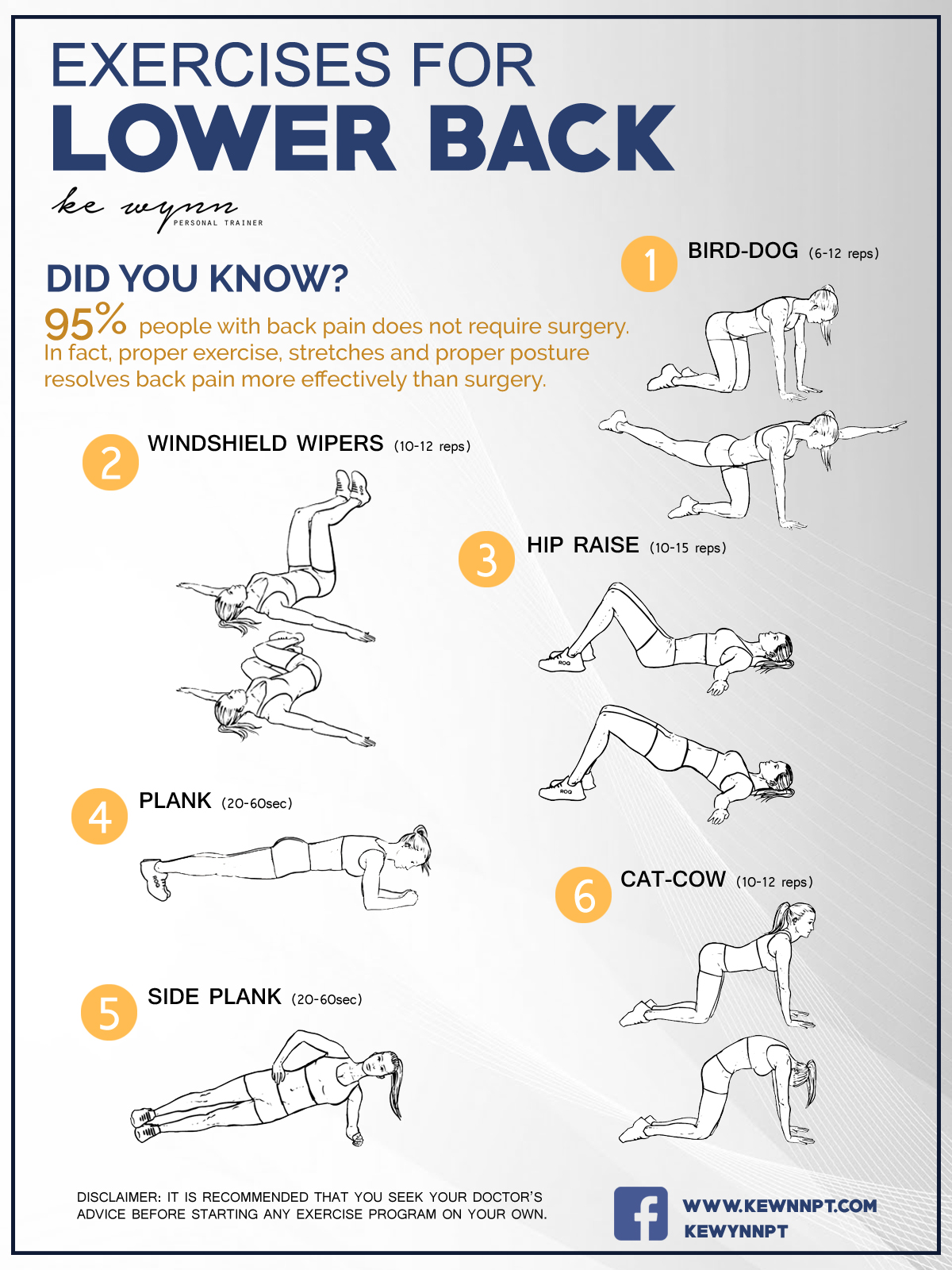
You might want to try out some abdominal and lower back exercises but I’d recommend that you mentioned this to your doctor before trying them. I've found some simple abdominal and back exercises that you might be interested in. You can access them here: https://www.kewynnpt.com/exercises-for-lower-back/

For convenient access, you can refer to the image below:


The Box Breathing Technique

Generally speaking, breathing techniques can reduce pain and make it easy for you to relax. There are plenty of breathing techniques out there but I’d recommend the Box breathing because of its simplicity. Like with any type of activity, this should be discussed with your doctor before giving it a try. 

You can do this while sitting, lying or standing. Choose the position you are most comfortable with. Simply inhale for three to four seconds. Hold your breath for 3-4 seconds. Exhale for 3-4 seconds. Hold your breath 3-4 seconds before moving on to the next cycle. 

Be mindful of your shoulders, as they might tense while you breathe which can work against the relaxing effect of the technique. 

Don’t push yourself too hard when doing this. This is meant to calm you down. If this technique causes any discomfort, discontinue immediately.


- Jason

Wednesday, 9 March 2022

How to Deal With Calcium Oxalate Kidney Stones


Kidney stones are a result of a build up of minerals, and salt in your urine which includes calcium and uric acid which form solid masses through crystallization. In most cases, this can be addressed by drinking enough water.

Acidity and Alkalinity

There are also cases when the urine is too acidic or too alkaline, which is usually caused by taking medications. This can also result in the formation of kidney stones.

Calcium Oxalate Kidney Stones

Kidney stones are made up of various crystal types. The majority of these crystals contain calcium. Determining the major ingredient of these crystals help you determine the type of kidney stones you are dealing with. One of the most kidney stones are calcium oxalate stones. Around 75% of the cases are caused by these stones.

Oxalate in Foods

Oxalate is actually found in some fruits and vegetables. You shouldn’t worry about this because your body actually gets more of this from your liver. There’s no need for you to be anxious about eating certain fruits and veggies, since the amount of oxalate present in them is not significant.

Avoiding Calcium

Considering the fact that calcium oxalate stones are primarily composed of calcium, it is easy to believe that reducing calcium intake will help prevent and eliminate the formation of this type of kidney stones. However, calcium is actually necessary to help get rid of oxalate. They help you by bonding themselves with oxalate, which makes it possible for your body to get rid of them through your urine. Assuming that your body is getting the right amount of calcium, you won't need to reduce your calcium intake.

Avoid Oxalate

Instead of reducing the intake of calcium, you should focus on reducing the oxalate in your body. To do that, you have to reduce your consumption of foods that are high in oxalate. These foods include the following: 

Oranges. 

Rhubarb. 

Soda (cola). 

Soy beans. 

Beans. 

Beer. 

Spinach. 

Sweet potatoes. 

Tea (black). 

Tofu. 

Wheat bran. 

Beets. 

Berries. 

Chocolate. 

Coffee. 

Cranberries. 

Spinach. 

Nuts. 

Soy milk.

Sufficient Liquid Intake

Assuming that you are not on any medication that might increase the chance of forming kidney stones, the immediate way to prevent the formation of calcium oxalate kidney stones is to make sure you are drinking enough water. Generally speaking, you should drink around 8 glasses of water in a day. Drinking water alone can aid in preventing the formation of solid masses in the kidneys and also get rid of small kidney stones.

You can think about the way it works by picturing a small mass of table salt. The only way to break it down inside a container is by diluting it in water.

Thursday, 20 June 2019

How Can Kidney Beans Help in Curing the Kidney Stones?

If you ask someone for tips on how to get rid of kidney stones, you will probably heard about kidney beans. Consuming kidney beans has been popular among the kidney stone alternative cure community. Since most of the things you read on the Internet are usually hard to believe, you are probably looking for information on how exactly kidney beans help in dissolving kidney stones.

What Are The Nutrients That Can Be Found in Kidney Beans?

One of the key nutrients in kidney beans that can help restore the health of your kidneys is fiber. It can help people with chronic kidney disease. Also, a fiber rich diet has been linked to reduced risk of having kidney stones.

Kidney beans help get rid of kidney stones and keep the kidneys healthy with its fiber content. And if your going to increase fiber content in your diet, you might want to eat other fiber-rich foods like whole grains, and oats.

How to Prepare Kidney Beans For Kidney Stones

While most would prefer making kidney bean broth, you would want to simply cook and directly it them. The reason for is that you are going for the fiber in the kidney beans. Hence, eating them directly is the best option.

Thursday, 13 June 2019

How Wheatgrass Can Cure Kidney Stones


If you are looking for natural cures for kidney stones, you may have heard about taking wheat grass to help dissolve those harmful stones in your kidneys. Wheat grass is full of antioxidants and nutrients that can help cure certain diseases and keep the body healthy. Despite this, there has not been study that says wheat grass can actually dissolve kidney stones.

A Quick Note on What Kidney Stones Are

Kidney stones are made up of crystallized salt and minerals. This is usually the result of too much salt in the blood due to lack of water and poor diet and also high acidity levels in the body. In most cases, you can prevent these stones from forming by staying hydrated, not eating too many salt and consuming alkaline rich foods.

Chlorophyll in Wheat Grass Can Dissolve Kidney Stones

Wheat grass, just like most green plants is rich in chlorophyll. This substance is capable of breaking down and dissolving calcium oxalate kidney stones. Keep in mind that calcium oxalate is just one type of kidney stone. Therefore, wheat grass may not be able to get rid of other types of kidney stones. Fortunately, calcium oxalate is the most common type of kidney stones.

Wheat grass, so far, has been proven to be effective at getting rid of calcium oxalate kidney stones. Further studies on its effectiveness on other type of kidney stones still need to be done. If you are not sure wheat grass is the right solution for you, seek the help of a medical professional.

Wednesday, 12 June 2019

How to Take Apple Cider Vinegar to Get Rid of Kidney Stone


As discussed in a previous post, apple cider vinegar can prevent kidney stones from forming as well as dissolve them. Before doing so, you should always keep in mind that apple cider vinegar is naturally acidic. Therefore, it should be taken in diluted form. Taking it in its undiluted form may damage your tooth enamel and your throat. And to be safe, rinse your mouth after taking ACV.

Honey and Apple Cider Vinegar

So, how do you prepare apple cider vinegar for direct consumption? The most common way to do it is to mix two tablespoons to a glass of water. To make a better taste, you can add a spoon of honey to the mixture.

Lemon Juice and Apple Cider Vinegar For Preventing Kidney Stones

If you are taking apple cider vinegar to get rid of kidney stones then it would help to add lemon juice to your ACV mixture. Since lemon juice also contains citrate, it can also help prevent new kidney stones from forming and also prevent existing kidney stones from getting any bigger. To keep your ACV mixture from getting too acidic, only add up to two tablespoons of lemon juice.

Olive Oil For Kidney Stones

Some suggests adding two tablespoons into your water+ACV+lemon juice mixture. This can provide you more health benefits since olive oil is rich in anti oxidants, which can help get rid of kidney stones.

Tuesday, 11 June 2019

How Can Apple Cider Vinegar Get Rid of Kidney Stones


Apple cider vinegar or simple ACV has been a popular all-around cure for many health problems and that includes kidney stones. But since a lot of people still doubt the effectiveness of the majority of natural kidney disease treatment, you have second thoughts about using this vinegar to get rid of your kidney stones. Now, this is understand due to the lack of research about the effectiveness of this vinegar.

A Little Bit About Kidney Stones


Kidney stones are solid crystals made primarily of salts and some minerals, which reside in the kidneys and the urinary tract. Now, salts and minerals come and go to your kidneys. They only become stones when they are highly concentrated in your kidneys. This high concentration may be caused by lack of water, abnormal metabolism and other health problems.

Kidney stones vary in sizes and can cause pain in the kidney area when urinating. It can also cause nausea and fever.

How Apple Cider Vinegar Can Get Rid of Kidney Stones

Apple cider vinegar is rich in citric acid. Health advocates and other people who take apple cider vinegar believe that the citric acid in ACV can break down and eventually dissolve kidney stones. Also, you won’t have to worry about new stones forming while treating yourself since apple cider vinegar can alkalize the blood, which prevents the formation of new kidney stones.

It has been observed that apple cider vinegar can help reduce inflammation, which can also reduce pain. Since it is rich in antioxidants, it can also get rid of toxins and other free radicals in the body.

Research About The Effect of Apple Cider Vinegar on Kidney Stones

There are not enough studies on the direct effect of Apple Cider Vinegar on Kidney Stones. However, certain studies suggest the potential of ACV for getting rid of kidney stones.

Apple cider vinegar contains potassium. Studies have shown that potassium can help prevent formation of kidney stones. Despite this, experts suggest that more studies should be done on the effective of potassium on kidney stones.

A study has also shown that fermented vinegar can prevent formation of kidney stones. Since apple cider vinegar is a fermented product, it may help you get rid of kidney stones.

Another study done on animals has shown the protective effect of ACV on kidney diseases. It can also increase anti oxidant enzymes in the body as well as decrease bad cholesterol levels. These effects can prevent kidney stones from forming.

Apple cider vinegar can be best viewed as a preventive measure rather than a cure. Whether you have kidney stones or not, it is worth taking ACV since it can help get rid of certain health problems and keep you healthy.

Thursday, 9 May 2019

Diet Tips for Curing Kidney Diseases

With all meal plans, including the kidney-friendly diet, you need to track how much of certain nutrients you take in, such as:
  • Calories
  • Protein
  • Fat
  • Carbohydrates
To make sure you are getting the right amounts of these nutrients, you need to eat and drink the right portion sizes. All of the information you need to keep track of your intake is on the “Nutrition Facts” label.
Use the nutrition facts section on food labels to learn more about what is in the foods you eat. The nutrition facts will tell you how much protein, carbohydrates, fat and sodium are in each serving of a food. This can help you pick foods that are high in the nutrients you need and low in the nutrients you should limit.
When you look at the nutrition facts, there are a few key areas that will give you the information you need:

Calories

Your body gets energy from the calories you eat and drink. Calories come from the protein, carbohydrates and fat in your diet. How many calories you need depends on your age, gender, body size and activity level.
You may also need to adjust how many calories you eat based on your weight goals. Some people will need to limit the calories they eat. Others may need to have more calories. Your doctor or dietitian can help you figure out how many calories you should have each day. Work with your dietitian to make a meal plan that helps you get the right amount of calories, and keep in touch for support.

Protein

Protein is one of the building blocks of your body. Your body needs protein to grow, heal and stay healthy. Having too little protein can cause your skin, hair and nails to be weak. But having too much protein can also be a problem. To stay healthy and help you feel your best, you may need to adjust how much protein you eat.

The amount of protein you should have depends on your body size, activity level and health concerns. Some doctors recommend that people with kidney disease limit protein or change their source of protein. This is because a diet very high in protein can make the kidneys work harder and may cause more damage. Ask your doctor or dietitian how much protein you should have and what the best sources of protein are for you.

Use the table below to learn which foods are low or high in protein. Keep in mind that just because a food is low in protein, it is not healthy to eat unlimited amounts.

Lower-protein foods:

  • Bread
  • Fruits
  • Vegetables
  • Pasta and rice

Higher-protein foods:

  • Red meat
  • Poultry
  • Fish
  • Eggs


Carbohydrates

Carbohydrates (“carbs”) are the easiest kind of energy for your body to use. Healthy sources of carbohydrates include fruits and vegetables. Unhealthy sources of carbohydrates include sugar, honey, hard candies, soft drinks and other sugary drinks.

Some carbohydrates are high in potassium and phosphorus, which you may need to limit depending on your stage of kidney disease. We'll talk about this in more detail a little later. You may also need to watch your carbohydrates carefully if you have diabetes. Your dietitian can help you learn more about the carbohydrates in your meal plan and how they affect your blood sugar.

Fat

You need some fat in your meal plan to stay healthy. Fat gives you energy and helps you use some of the vitamins in your food. But too much fat can lead to weight gain and heart disease. Try to limit fat in your meal plan, and choose healthier fats when you can.

Healthier fat or “good” fat is called unsaturated fat. Examples of unsaturated fat include:
  • Olive oil
  • Peanut oil
  • Corn oil
Unsaturated fat can help reduce cholesterol. If you need to gain weight, try to eat more unsaturated fat. If you need to lose weight, limit the unsaturated fat in your meal plan. As always, moderation is the key. Too much “good” fat can also cause problems.

Saturated fat, also known as “bad” fat, can raise your cholesterol level and raise your risk for heart disease. Examples of saturated fats include:

  • Butter
  • Lard
  • Shortening
  • Meats
Limit these in your meal plan. Choose healthier, unsaturated fat instead. Trimming the fat from meat and removing the skin from chicken or turkey can also help limit saturated fat. You should also avoid trans fat. This kind of fat makes your "bad" (LDL) cholesterol higher and your "good" (HDL) cholesterol lower. When this happens, you are more likely to get heart disease, which can cause kidney damage.

Sodium

Sodium (salt) is a mineral found in almost all foods. Too much sodium can make you thirsty, which can lead to swelling and raise your blood pressure. This can damage your kidneys more and make your heart work harder.

One of the best things that you can do to stay healthy is to limit how much sodium you eat. To limit sodium in your meal plan:
  • Do not add salt to your food when cooking or eating. Try cooking with fresh herbs, lemon juice or other salt-free spices.
  • Choose fresh or frozen vegetables instead of canned vegetables. If you do use canned vegetables, drain and rinse them to remove extra salt before cooking or eating them.
  • Avoid processed meats like ham, bacon, sausage and lunch meats.
  • Munch on fresh fruits and vegetables rather than crackers or other salty snacks.
  • Avoid canned soups and frozen dinners that are high in sodium. • Avoid pickled foods, like olives and pickles. • Limit high-sodium condiments like soy sauce, BBQ sauce and ketchup.
Important! Be careful with salt substitutes and “reduced sodium” foods. Many salt substitutes are high in potassium. Too much potassium can be dangerous if you have kidney disease. Work with your dietitian to find foods that are low in sodium and potassium.

Portions:

Choosing healthy foods is a great start, but eating too much of anything, even healthy foods, can be a problem. The other part of a healthy diet is portion control, or watching how much you eat.
To help control your portions:
  • Check the nutrition facts label on a food to learn the serving size and how much of each nutrient is in one serving. Many packages have more than one serving. For example, a 20-ounce bottle of soda is really two-and-a-half servings. Many fresh foods, such as fruits and vegetables, do not come with nutrition facts labels. Ask your dietitian for a list of nutrition facts for fresh foods and tips for how to measure the right portions.
  • Eat slowly, and stop eating when you are not hungry any more. It takes about 20 minutes for your stomach to tell your brain that you are full. If you eat too quickly, you may eat more than you need.
  • Avoid eating while doing something else, such as watching TV or driving. When you are distracted you may not realize how much you have eaten.
  • Do not eat directly from the package the food came in. Instead, take out one serving of food and put the bag or box away.
Good portion control is an important part of any meal plan. It is even more important in a kidney-friendly meal plan, because you may need to limit how much of certain things you eat and drink.

Six Tips to Stay Hydrated

Summer is prime time for outdoor sports, family vacations, BBQs, festivals and long days in the sun. While you are enjoying those activities and the hot weather, it’s easy to be hit by dehydration—and most people don’t see it coming. Summer is also prime time for dehydration, electrolyte imbalances and even heat stroke—all of which are more common than you might think. Let’s explain.

Today, more than 50 percent of all children and adolescents in the U.S. are not getting the hydration they need, according to research from the Harvard T.H. Chan School of Public Health. And that number jumps even higher when you put them, or adults for that matter, on the playing field. In a study in the International Journal of Sport Nutrition and Exercise Metabolism of 11- to 16-year-old children participating in a summer soccer camp, nine out of 10 of them were under-hydrated, putting them at risk of serious health complications.

This summer, keep your family on top of its game with these six hydration-boosting tips:

1. Help Yourself to Hydration-Boosting Nutrients

To stay hydrated, you and your family often need more than water. You also need electrolytes and carbohydrates, explains Jennifer Williams, a research scientist with Abbott.

While both nutrients can help your body absorb whatever fluids you drink, electrolytes – sodium, chloride, potassium, magnesium and calcium – are especially important because they are critical to healthy nerve and muscle function. And, all of these electrolytes can be lost through sweat, she says.

Fortunately, electrolyte drinks like Pedialyte contain both electrolytes and carbohydrates, which Bede advises consuming when exercising for longer than 60 minutes or during any activity performed in extreme temperatures.
width=


2. Don’t Forget Foods

Your food (not just beverage!) choices can account for approximately 20 percent of your daily fluid intake, and are therefore a major contributor to you and your family’s overall hydration status. Luckily, many foods that are in season in the hot summer months – such as melon, tomatoes and strawberries – are naturally rich in water, carbohydrates and minerals, including those all-important electrolytes.

In addition to dishing out juicy produce as a pre- and post-workout snack (orange slices, anyone?), infusing water with fresh fruit and vegetables like cucumber can give your ordinary bottle of water an extraordinary and healthy dose of flavor. 

That flavor boost may be your secret weapon in getting your children to drink up – which is vital since children are at an increased risk of dehydration and heat stroke due to their body composition. Research from McMaster University shows that when provided with beverages that contain flavor, carbs and the electrolyte sodium chloride, young boys voluntarily drink up to 90 percent more fluid than they do otherwise. Parenting for the win!

3. Check the Toilet

Without getting too vivid, your urine color can function as a simple indicator of your hydration status, Williams says. Before, during and after outdoor activities, take a quick look at your urine output. If your urine is a light lemonade color, it’s likely that you are properly hydrated. Dark yellow urine (as in dark or darker than apple juice) typically signals dehydration and need for immediate rehydration, she says.

4. Weigh Yourself Before and After Exercise

Sweating is a major contributor to dehydration during summer sports. Sweat quickly evaporates off of the skin, especially when you are in extreme temps. To gauge your sweat losses and consequent hydration needs, Williams recommends weighing yourself naked both before and after exercising. Every pound lost between the beginning and end of an exercise routine represents 16 ounces of water – gone.

Losing less than 1 percent of your bodyweight during the course of your workout is optimal, she says. Once you lose 1 percent of your body weight in water (so if you weigh 180 pounds, 1.8 pounds), exercise performance begins to suffer and fatigue can set in. “You might be running an 8-minute mile, but it will feel like you are pushing a 6-minute pace,” she says.


5. Drink the Night Before a Morning Workout

To stay one step ahead of the disastrous effects of dehydration, it’s important that everyone starts their day and or workout hydrated, drink during activity and rehydrate when it’s over. If you or your kids have a morning workout on the agenda (summer camps and tournaments, anyone?), you need to prioritize hydration the night before, Williams says. That’s because, after spending eight hours in bed not drinking anything, it’s easy to wake up in a dehydrated state, and that’s even before you factor in exercise.

Bede recommends drinking plenty of water a couple of hours before bed and upon waking. Try water and healthy juices at breakfast to get the kids to drink up.

6. Opt for Water (Not Soda!) During Airplane Flights

During summer travel with your family, stints in airports and on airplanes can be very dehydrating. It’s easy not to drink as much as you usually do when you’re on the go, and airplanes are known for low-humidity air that contributes to low hydration statuses upon touchdown.

Pack an empty refillable water bottle in your family’s carry-on bags and, after going through security, fill them up with water. Many airports now have water fountains designed specifically for refilling water bottles. Pack a Pedialyte powder stick to add to your water to make sure you’re replenishing needed electrolytes. Skip the vending machine soda and, when the beverage cart passes through the cabin on your flight, opt for water. “Soft drinks do a poor job at rehydration and the high sugar concentration can interfere with your body’s ability to absorb water,” says Williams.

Get Rid of Kidney Stones By Making Yourself Pee More With These Foods (Flomax Alternatives?)

  (Photo Credit: Maja Cvetojevic @majacvetojevic) Urinate More Often One of the most commonly prescribed medicine for those who have kidn...